
Dr. Brian Faulkner named 2026 Campus KEEN Rising Star
Faulkner has been recognized nationally for bringing real-world relevance and
entrepreneurial mindset into engineering education
When Dr. Brian Faulkner walks into a classroom, he wants students to understand more than equations and circuit theory. He wants them to see how engineering shapes the world.
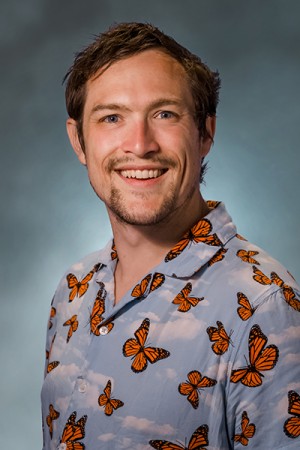
That commitment to connecting classroom concepts with real-world applications has earned Faulkner, who is an associate professor of electrical engineering, recognition as a 2026 Campus KEEN Rising Star.
Presented by the Kern Entrepreneurial Engineering Network (KEEN), the award recognizes faculty members with fewer than 10 years of experience who exemplify the entrepreneurial mindset in engineering education. Only 19 faculty members across the national KEEN network received the distinction in 2026.
“Dr. Faulkner is committed to helping students develop an entrepreneurial mindset through application-driven learning and he is preparing them to make meaningful contributions in their professions and communities,” said Dr. Joe Tranquillo, executive vice president of academics. “This recognition from KEEN reflects both his innovative teaching and his dedication to student success.”
A cornerstone of Faulkner’s work has been reimagining how electrical circuits are taught.
Now entering his eighth year at MSOE, Faulkner is an author of an upcoming electric circuits textbook designed to break from traditional engineering education models. Rather than relying on abstract or contrived examples, every homework problem is tied to authentic applications and real-world data.
Students analyze technologies and systems they encounter every day, from medical devices that monitor heart rate to household appliances and power transmission systems. The goal is to spark curiosity while helping students understand how a single set of engineering principles applies across a wide range of practical challenges.
“Students often know that a technology exists, but they don’t know why it works,” Faulkner said. “When they see those connections, they become more engaged because they’re learning something that feels real.”
The impact extends beyond his own classroom. Faculty members teaching circuits courses have adopted many of Faulkner’s notes, assignments and instructional materials, allowing real-world applications to remain a central part of the student experience regardless of instructor.
Faulkner has also helped reshape MSOE’s circuits curriculum to better serve students across engineering disciplines.
Rather than designing introductory circuits courses primarily for electrical engineering students, the curriculum is built around the needs of multiple majors. Working with faculty across departments, Faulkner has championed a streamlined approach that reduces barriers for students changing majors while ensuring all engineering students receive relevant foundational knowledge.
“It’s gratifying to know that the work we’re doing is making a difference for students,” said Faulkner. “At the end of the day, I want students to understand why what they’re learning matters and how it connects to the problems they’ll solve in their careers.”
Faulkner credits KEEN and MSOE’s participation in the network for helping make these innovations possible. A KEEN grant provided both financial support and encouragement. Without that support, he says he likely would not have taken on such a significant departure from traditional teaching methods.
“The grant gave me the confidence to try something entirely different,” he said. “Now that I’ve seen the results, I can’t imagine going back.”
KEEN has also helped Faulkner build a national network of like-minded educators. Through conferences and events, he has collaborated with faculty from other institutions, co-authored educational research and exchanged ideas about how to create more meaningful and relevant learning experiences for engineering students.