
2026 MSOE AI Week Speakers
Jump to: Monday, April 20 Speakers | Thursday, April 23 Speakers | Saturday, April 25 Speakers
Monday, April 20 Speakers
Sarah Alt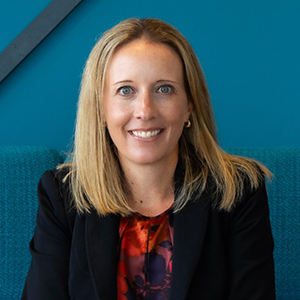
Sarah Alt is an accomplished professional in ethical artificial intelligence with extensive IT expertise working for and consulting with companies, professional services firms, institutions of higher education, startups and nonprofits. As the CIO for Phelps Dunbar, Alt spearheads strategies for people, process and technology to drive innovation, excellence and value. Alt is an IAPP certified AI governance professional and has contributed to ethical guidelines and standards for the Institute of Electrical and Electronics Engineers (IEEE) and the National Institute of Standards and Technology (NIST). Alt was nominated to serve on the 2024 Legislative Council Study Committee on the Regulation of Artificial Intelligence in Wisconsin, is a 2025 Lawdragon 100 Leading AI & Legal Tech Advisors and was nominated to the 2025 Milwaukee Business Journal Women of Influence.
Robert Claus
Robert Claus is a software developer with over a decade of experience working with data. He currently leads the engineering teams at Plotly, building cutting edge AI tools for data scientists. Before this, he was CTO at the Madison startup DataChat where he led the team in building a natural language data processing platform. Claus also has experience in the healthcare data space, having worked at Epic Systems with international data exchange standards. His recent work has focused largely on applying LLM code generation techniques to data analytics.
Nancy Connolly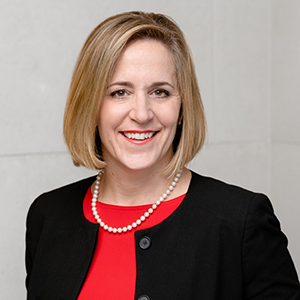
Nancy Connolly is president of Hammes Healthcare and brings more than 25 years of deep industry knowledge. At Hammes, Connolly focuses on the strategic planning and development of healthcare assets. She works directly with clients on key initiatives including ambulatory network planning, project feasibility planning, site selection and project management for ambulatory facilities, hospital expansions and new hospitals. Connolly has been directly involved in the planning and delivery of hospital programs in excess of $3 billion. Prior to joining Hammes, Connolly was a senior regional manager for The Advisory Board Company. She graduated summa cum laude with a Bachelor of Science from Springfield College in Springfield, Massachusetts, and earned an MBA in marketing and corporate strategy from the Robert H. Smith School of Business from University of Maryland.
Melissa Desnoyers
Melissa Desnoyers manages the global Edison Engineering Development Program for GE HealthCare, defining the accelerated full-time entry level and internship program for design engineers into the company. Desnoyers has 23 years with GE HealthCare, a $19 billion leading global medical technology, pharmaceutical diagnostics and digital solutions company. Prior, she spent ten years serving as global clinical research manager and as lead cardiac design engineer. Desnoyers’ background with the company includes a long-term focus on the translation of new product capabilities into practice providing solutions to unmet clinical needs as well as mentorship for the company’s technical career path. She has a B.S. in Engineering with dual major in Biomedical Engineering and Electrical Engineering from Duke University. Desnoyers serves on the Biomedical Engineering Industry Advisory Council at MSOE.
Jon Evans
Jon Evans is a technology executive with over 30 years of experience navigating disruptive innovation, from the dot-com boom through cloud infrastructure to the current AI transformation. As chief AI officer at Impact Networking, Evans leads a dual mission: accelerating AI adoption across the enterprise while developing frameworks for client transformation. His career includes pioneering work in early e-commerce, content management systems and streaming media, including founding a video streaming startup five years before YouTube. Evans has developed original frameworks for human-AI collaboration, most notably Thought Architecture™, a methodology grounded in organizational learning theory that guides organizations toward AI implementations that amplify human intelligence rather than merely automate tasks.
Jack Flitcroft
After graduating from MSOE in 2022, Jack Flitcroft worked as a data scientist for GE HealthCare before moving into the startup world. After an unfortunate downturn in the startup he had just joined, he ventured into building his own startup with two co-founders where they use AI to automate the tax preparation and review workflows for CPAs. This company was called TruePrep originally before we renamed it to Juno. Today at Juno, Flitcroft is the head of AI and primarily works with the organization’s engineering team on using agents to extract, import and review complex tax information. The team has been at the forefront of modern applied AI, where they’ve released some of the earliest agents to the tax tech market.
Cyndi Petterson
Cyndi Petterson is a senior manager of firmware engineering at Milwaukee Tool. She started her career as a firmware test automation engineer for various PLCs. She then moved to security test engineering before ultimately transitioning to leadership. As a manager at Milwaukee Tool, Petterson leads an organization of firmware, hardware and IoT engineers to help support new product development in the power tool space.
Jeff Zingsheim
Jeff Zingsheim is an accomplished engineering leader with over 35 years of experience leading international, multi-functional teams across diverse sectors, including cybersecurity, IoT, software consulting and energy management. A proud alumnus of MSOE, Zingsheim holds both a B.S. in Computer Engineering and an M.S. in Engineering Management. Throughout his career, Zingsheim has navigated the intersection of technical architecture and strategic business development. Today, he is assistant director of engineering at Northwestern Mutual. His expertise spans solution architecture, commercial strategy and the rapid deployment of emerging technologies. As chair of MSOE’s Computer Engineering Industry Advisory Committee, Zingsheim is deeply committed to bridging the gap between academic preparation and industry needs, providing a unique perspective on the evolving literacy and competencies required for the next generation of the AI-driven workforce.
Thursday, April 23 Speakers
Amanda Albrecht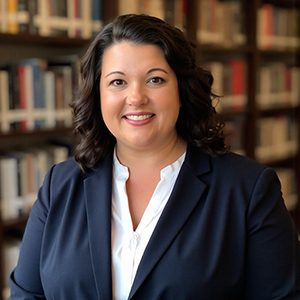
Amanda Albrecht is the digital learning education consultant with the Wisconsin Department of Public Instruction, focusing on emerging technologies, AI and instructional innovation. She strives to open doorways for districts and educators that help them see the potential of technology integration within their classrooms.
Tina Austin
Tina Austin is an AI ethics consultant and biomedical researcher who helps universities adopt AI critically and responsibly. She is the creator of the UnBlooms™ Framework and UnBlooms™ scale which reimagines Bloom’s Taxonomy for accessible, inclusive and critical AI literacy. Recognized as a 2025 Microsoft Innovative Educator Expert and one of ASU+GSV’s Leading Women in AI, Austin has taught at UCLA, USC, CSU and Caltech across fields ranging from regenerative medicine to communication. She serves in advisory roles with the California Department of Education’s AI & Workforce Board, the Los Angeles AI Taskforce and the Marconi Society, and is a member of Oxford University’s global AIEOU community. Her work has been featured by OpenAI, Microsoft, and Duolingo, and her mission is to advance inclusive, evidence-based approaches to AI in education.
 Lauren Croix, Ed.D.
Lauren Croix, Ed.D. is the executive director of educational services for the Mequon-Thiensville School District. With over a decade of progressive leadership roles in education management, her expertise lies in spearheading strategic initiatives that enhance learning environments. At Mequon-Thiensville School District, Croix and her team leverage data analysis and innovative technologies to drive continuous improvement to improve student outcomes. Croix holds a B.A. in Education and M.A. in Teacher Leadership, Reading from Carthage College and earned her Doctor of Education from the Johns Hopkins University School of Education.
Daniella DiPaola
Daniella DiPaola is a Ph.D. candidate at the MIT Media Lab. Her work lies at the intersection of AI, children and society. She conducts research on human-AI interaction, develops curricula on the responsible creation and use of AI, and supports educational policy regarding the use of AI in schools. Her research has been featured at top ACM and IEEE conferences in human-computer interaction and STEM education. DiPaola received her Bachelor’s in Human Factors Engineering from Tufts University and her Master’s in Media Arts and Sciences from MIT. Before her graduate studies, she was a design researcher at Jibo Inc., where she researched the world’s first social robot from the home.
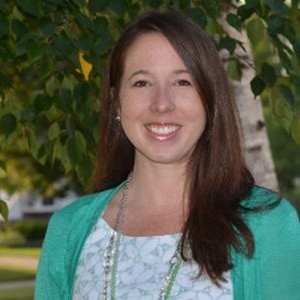 Kelli Kwiatkowski
Kelli Kwiatkowski is the director of secondary schools for the School District of New Berlin. She received her bachelor’s degree from UW-Stevens Point in mathematics education and her master’s degree from Marquette University in Educational Policy and Leadership with a Principal and Director of Curriculum and Instruction certificate in 2006. In 2013, Kwiatkowski completed coursework through UW-Whitewater and UW-Stevens Point to earn state certification as a Coordinator of the Gifted. Working in education for over 12 years, Kwiatkowski began her career as a math teacher, freshmen mentor advisor, and dance coach for the Elmbrook School District and used her leadership skills in varied roles.
Julia Leeson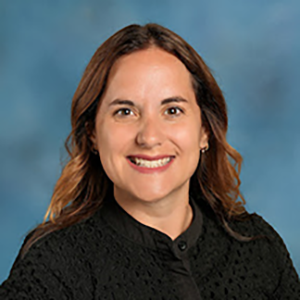
Julia Leeson is the director of teaching and learning for the Grafton School District, where she supports districtwide efforts focused on curriculum, professional growth, teaching practices, student learning and data-informed decision making. Her work includes helping educators thoughtfully integrate AI into classrooms in ways that align with district guidelines, support high-quality instruction, and enhance effective teaching practices. Leeson collaborates closely with the Grafton AI Task Force, a team of teachers and district leaders, to provide intentional professional development and ensure students are prepared for life after high school.
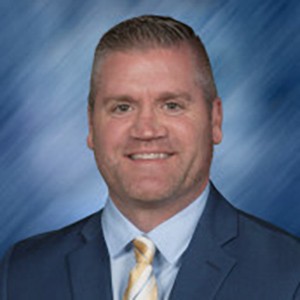 Tony Spence
Tony Spence is superintendent for the Waterford School District. He is an experienced chief information officer with a demonstrated history of working in the education management industry. Spence is skilled in K-12 education, classroom management, educational technology and instructional design. He holds a master’s of educational technology, education from Cardinal Stritch University and is pursuing a Ph.D. focused in Educational Leadership and Administration from Marian University.
Andrew B. Williams, Ph.D., MBA
Dr. Andrew B. Williams is a leader in AI, humanoid robotics and higher education. He is currently the dean of engineering at The Citadel, where he directs the AI, Algorithmic Integrity and Autonomy Innovation (AI³) Center. He holds a B.S. and Ph.D. in Electrical Engineering from the University of Kansas, an M.S. in Electrical and Computer Engineering from Marquette University, and an MBA from Rockhurst University. He also completed MIT’s Applied Generative AI for Digital Transformation program. With over 100 technical publications and presentations, Williams’ work has been supported by the NSF, NASA, NIH, Apple, Google, Microsoft Research and AWS. He was an inaugural AWS Education Champion and served on the AWS Machine Learning University Advisory Board. His advocacy for underrepresented students led Steve Jobs to recruit him as Apple’s first Senior Engineering Diversity Manager.
Rachel Yurk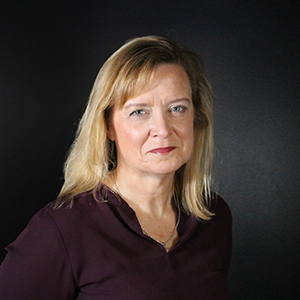
A veteran educator with over 30 years of experience, Rachel Yurk strives to be a leading voice in the strategic integration of artificial intelligence within the K-12 landscape. As the chief information and technology officer for the Pewaukee School District, Yurk has pioneered the district’s AI strategic roadmap since 2022, focusing on instructional innovation. Beyond her district leadership, she serves as the lead organizer of the Southeast WI AI Summit, fostering regional collaboration on the ethical and practical applications of emerging technology and AI. A seasoned presenter at national stages like ISTE and NSBA, Yurk combines her deep classroom roots with technical expertise to help educators navigate the evolving AI frontier.
Saturday, April 25 Speakers
Tim Dickson
Tim Dickson is the chief digital and information officer at Regal Rexnord, responsible for leading the company’s global digital and information technology organization. Dickson focuses on advancing enterprise-wide digital transformation, strengthening core technology capabilities and enabling data- and AI-driven decision-making to support growth and customer experience excellence. Dickson previously served as the first CIO at Generac Power Systems and held senior leadership roles at Motorola Solutions and Dell Technologies. Across his career, he has led large-scale digital modernization efforts, M&A integrations, emerging technology programs, and customer-centric experience transformations. A strong advocate for digital talent development and AI-led innovation, Dickson is committed to building high-performing teams and positioning Wisconsin as a leading technology hub. He actively mentors leaders, shares best practices in emerging technologies, and supports community-focused initiatives.
Chris GauthierDickey, Ph.D.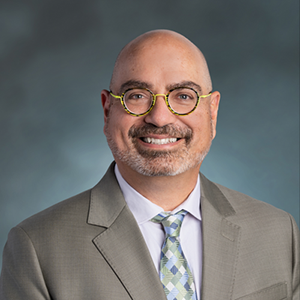
Chris GauthierDickey, Ph.D. is the inaugural head of the Dwight and Dian Diercks School of Advanced Computing and Direct Supply Chair of Applied AI and Software Innovation at MSOE, where he’s working to help expand applied AI education across the university. A first-generation college graduate, he co-led an NSF-funded multi-institutional initiative to redesign computing curricula to be more accessible to all students, resulting in significant gains in retention, engagement and students’ sense of belonging. His research spans distributed systems, programming languages, AI ethics, CS education, and the intersection of computing and the arts, with creative works exhibited at the Denver Art Museum, the Minneapolis Institute of Art and Southern Utah Museum of Art. He holds a Ph.D. in Computer Science from the University of Oregon.
Liz Jensen, Ph.D., MSN, RN-BC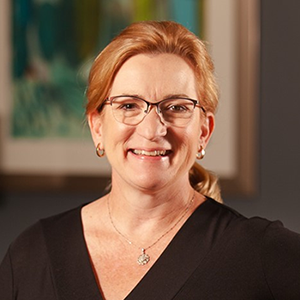
Liz Jensen, Ph.D., MSN, RN-BC, is the clinical director at the Direct Supply Innovation & Technology Center, where she leads pragmatic discovery and digital care innovation. She partners with technology, business, academia, healthcare and senior living to define high-impact care and workforce problems, vet emerging technologies, and accelerate evidence-informed decisions that improve outcomes and organizational performance. Jensen also leads the SPARK Clinical Collective. She serves on the MSOE School of Nursing Advisory Board. Jensen holds a BSN from Creighton University, an MSN from Cardinal Stritch University, and a Ph.D. in Leadership for the Advancement of Learning & Service. She brings perspective on how AI and digital technologies can be responsibly applied to redesign care models, support the nursing workforce, and deliver measurable value in regulated care environments.
Jeremy Kedziora, Ph.D.
Jeremy Kedziora, Ph.D. is an associate professor and PieperPower Endowed Chair in Artificial Intelligence at MSOE. Kedziora is an award-winning researcher and scientist with nearly 20 years of experience studying machine learning and multi-agent systems. Previously, he was a director of data science and analytics at Northwestern Mutual, where he managed the development of machine learning and modeling efforts focused on cybersecurity. Prior to that, Kedziora led product development at financial tech startup Giant Oak where he focused on natural language processing. He also was a chief methodologist for the Central Intelligence Agency where he led applied R&D efforts in data science and modeling. He holds a Ph.D. in political science from the University of Rochester, has taught at UW-Madison, and serves as an advisor to multiple fintech startups.
Nataliya Kosmyna, Ph.D.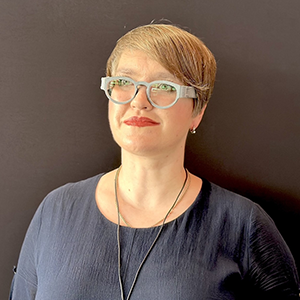
Nataliya Kosmyna, Ph.D. is a research scientist at MIT Media Lab’s Fluid Interfaces group and a visiting faculty researcher at Google. She has over 15 years of experience in developing and designing end-to-end brain-computer interfaces (BCIs). She is passionate about the idea of creating a partnership between AI and human intelligence. Kosmyna’s projects explore ways of helping people with ALS, mvASD and other health challenges, to communicate with their families, caregivers, and to control their homes or robots. Kosmyna’s solutions and projects are successfully deployed in classrooms, hospitals, workspaces, aerospace, Lower Earth Orbit and on the moon. Kosmyna won multiple awards for her work, including the L’Oréal-UNESCO Women in Science award, she was named as one of 10 Top French Talent from MIT Innovators Under 35 and more. Her work was covered in more than 400 TV appearances, radio and other news outlets all around the world including New York Times, The New Yorker, CNN, Washington Post, Time, Nature, CBS News and more.
Peter S. LaViolette, Ph.D.
Peter S. LaViolette is a professor of radiology, biophysics and biomedical engineering at the Medical College of Wisconsin. He holds the Robert C. Olson Professorship in Radiology and serves as vice chair of radiology research and director of the Radiology Quantitative Imaging Laboratory Shared Resource. LaViolette received his Ph.D. in Biophysics from MCW in 2011. His research focuses on advanced brain and prostate cancer characterization using MRI, with particular emphasis on radio-pathomics and the development of novel imaging biomarkers. He has made significant contributions to the fields of neuro-oncology and prostate cancer imaging, and utilizes 3D-printing for creating custom tissue sectioning jigs for patient specific analyses in radio-pathomics. LaViolette has secured substantial research funding from various sources including the NIH, Department of Defense and philanthropic foundations.
Luke Leonhard
Luke Leonhard is chief of staff at Google DeepMind, serving the speech and audio teams, ensuring that GDM's Gemini models can be used across Google products and serve users across the world. His teams provide data, computation, and policy guidance for processing audio.
Leonhard has been at Google for 13 years, and previously he was at Brady Corporation in Milwaukee, where he served as a user experience manager, web application services manager and software developer. Leonhard graduated from MSOE in 2004 with a B.S. in Business and Computer Systems. He was an adjunct professor at MSOE from 2012 to 2013 and taught management information systems courses.
Aaron Pritz
Aaron Pritz is the CEO, principal consultant and co-founder of Reveal Risk, a company he started to address a gap he and his partners observed over many years working with major consulting firms. Pritz is a former Eli Lilly senior IT and security/privacy/risk leader with over 20 years of experience in the pharmaceutical sector and supporting a Fortune 500 company. He has created global insider threat and employee engagement programs after insider theft breaches affected intellectual property within the pharma industry. He founded the risk management working group for the H-ISAC (Healthcare Information Security and Analysis Center). Pritz provides comprehensive solutions to the toughest problems. He is a certified Lean Six Sigma Blackbelt and holds numerous cybersecurity and privacy certifications (SANS GCCC, CIPP, CISA, CSM, CTPRP).
Paula Schmidt, MSN, MBA, RN, NEA-BC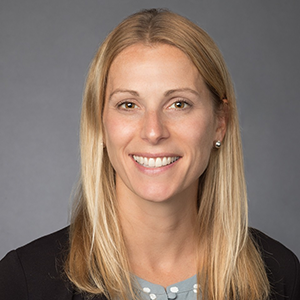
Paula Schmidt, MSN, MBA, RN, NEA-BC, is the chief nursing officer and vice president of patient care services at Froedtert Hospital, part of the Froedtert & the Medical College of Wisconsin health network. With over two decades of healthcare leadership experience, Schmidt has held key roles at Froedtert Health and Children’s Hospital of Wisconsin, where she has consistently driven operational excellence and championed patient-centered care. Schmidt is known for her strategic vision and compassionate leadership, blending clinical expertise with business acumen to enhance care delivery and foster innovation. She holds both an MSN and an MBA from the UW–Milwaukee. A passionate advocate for workforce well-being, her efforts have helped shape a supportive environment where nurses feel valued and empowered.
Richard Stasik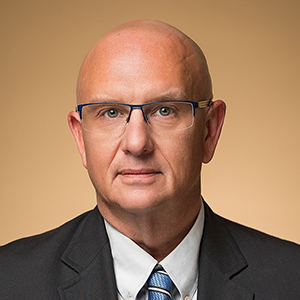
Richard (Rich) Stasik is vice president – regulatory affairs for WEC Business Services. Stasik directs, coordinates and advocates on the company’s behalf with Commission personnel and external stakeholders for key regulatory filings such as rate cases and large capital construction projects for WEC Energy Group’s utilities in Wisconsin, Illinois, Michigan and Minnesota. He also leads efforts to develop, obtain regulatory approval and implement key customer rates and programs, including the recently-filed data center rates as well as the company’s electric generation and natural gas infrastructure projects. Stasik leverages his over 15 years of experience at Ernst & Young LLP, Northwestern Mutual and Ascension Health. He earned a BBA in Accounting and a BBA in Management Information Systems from UW–Milwaukee and is a licensed CPA in Wisconsin.
Max Wintermark, MD
Dr. Max Wintermark is a Swiss-American neuroradiologist renowned for pioneering brain perfusion scanning techniques. He holds an MD from the University of Lausanne, a Master’s in Clinical Research from UCSF and an MBA from UMass Amherst. After training in neuroradiology in Switzerland and at UCSF, he advanced through faculty positions at UCSF, the University of Virginia and Stanford University, where he served as professor of radiology and chief of neuroradiology from 2014 to 2022. Since 2022, he has been professor and chair of neuroradiology at The University of Texas MD Anderson Cancer Center in Houston. His research focuses on clinical translation of advanced neuroimaging for cancer, stroke, traumatic brain injury, and psychiatric conditions, with over 750 publications. Wintermark currently serves as the editor-in-chief of the American Journal of Neuroradiology.
Larry Zhiming Xu, Ph.D.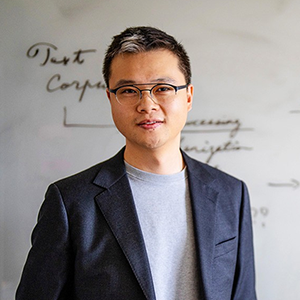
Larry Zhiming Xu, Ph.D. is an assistant professor of strategic communication and an assistant professor of information systems and analytics at Marquette University, where he founded the Ai4Ai Lounge (Artificial Intelligence for Analytics and Insights). An affiliated faculty at the Northwestern Mutual Data Science Institute (NMDSI), he has co-chaired its Research and Talent Subcommittees, helping lead collaborative initiatives that connect academia, industry and the broader community. His research applies experimental and computational methods to understand how emerging technologies shape human communication, judgment and social relationships in organizational and educational settings. He earned his Ph.D. from the University of Southern California and now calls Wisconsin home.
Jump to: Monday, April 20 Speakers | Thursday, April 23 Speakers | Saturday, April 25 Speakers