
 Exploring Excellence
“Learn from your disappointments and your successes. Discover who you are and what drives you. Success builds strength and confidence. It's a learning process that, with time, will serve you well throughout your career.”
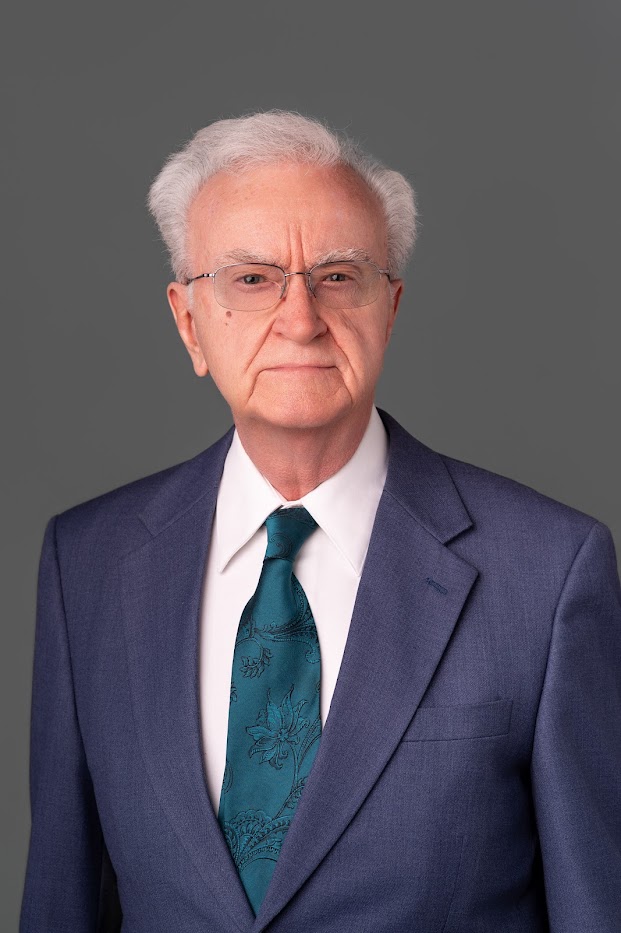
Curiosity and exploration have always been at the heart of Terrell “Terry” Williams ’67 story. As a young boy he embraced the challenge of tackling new things. It's what drove his pursuit of new ideas. Those ideas eventually led him into a field outside of his comfort zone, where his achievements would help shape biomedical engineering and enhance the capabilities of pacemaker technology as we know it today, ultimately helping save thousands of lives.
Growing up in Marquette, MI, Terry turned the geologically rich landscape around him into a hands-on laboratory. As a boy, he recalls making black gunpowder, mining veins of galena to craft crystal-set radios, building rockets and simple firearms, and even forging a commercial-grade hunting knife from a car leaf spring.
His innate curiosity found direction during a high school career day. “A visiting engineer convinced me that an education in engineering was the path to take if you enjoy innovation,” Terry said.
After high school, Terry enrolled at Letourneau University in Longview, TX, to study industrial engineering. Coming from a lower-income family, he worked part-time to fund his education while many of his classmates relied on family support. Seeking a more rigorous academic environment with a stronger focus on innovation, he transferred to MSOE after his first semester.
“I have a cherished, and very vivid memory of walking up the steps of the old building on north Broadway Street with my dad as a 19-year-old and turning right into President Karl Werwath’s office. We made our case, citing the grades I earned at Letourneau and my financial need, and asked him to consider me for a scholarship. President Werwath granted me a 50% scholarship.”
Engineering with Heart
At MSOE, Terry immersed himself in electrical engineering while taking electives such as private pilot ground school and continuing to work part-time including available engineering departments at four local companies between quarters, via MSOE’s industry-centric co-op program—an indispensable headstart. After graduating in 1967, he joined 3M as an electrical engineer. Soon afterward, his newborn son was diagnosed with a congenital heart defect—a pivotal, perhaps providential, moment that would redirect Terry’s career toward the emerging field of biomedical engineering.
“When my son was born with a heart defect I needed to understand all I could about his ‘congenitally corrected transposition.’ I wanted to apply my MSOE engineering foundation and the joy of innovation to support unmet needs in the new and growing practice of cardiac disease intervention, despite the empirical, rather than the deterministic, nature of discovery and engineering,” Terry said.
“Our son whom we were told ‘may survive until he was eight’ is now thriving in his mid-50s. That, along with gaining Insite and clarity during evenings of quiet contemplation and prayer for wisdom before falling to sleep, is suggestive to me, of a personal God.”
In 1969, Terry joined Litton Industries, where he designed circuit systems and developed the drive mechanism for an early implantable heart. Two years later, he joined Medtronic, beginning a groundbreaking 41-year career. As a program manager and technical fellow, Terry was named an inventor on 50 U.S. patents. Nine of his patents remain active on the market today.
“Physics and fundamentals of electrical and mechanical engineering, along with the chemistry that I learned at MSOE, provided the foundation for product innovation. I followed the advice of Medtronic’s founder to support visionary physicians through close collaboration, pairing their clinical insights with engineering expertise to drive breakthroughs,” Terry said.
Working directly with pioneering cardiologists, Terry revolutionized cardiac pacing. Notably, he developed conduction-system pacing technology designed to reduce pacing-induced heart failure. His patented Medtronic Model 3830 lead and delivery catheters have transformed the field. Today, roughly one-third of all pacemaker implanters use conduction system pacing. A remarkable figure Terry expects will eventually reach 100%.
Paying it Forward
Though Terry retired from Medtronic in 2012, his mission was far from over. That same year, he founded the Pacemaker Patient Advocacy Group (PPAG), dedicated to empowering pacemaker patients and improving outcomes. The volunteer organization equips patients and health care providers with resources to help individuals take an active, informed role in their heart health.
The organization’s website features more than 250 scientific papers on conduction system pacing and provides answers to frequently asked questions from patients and physicians.
Today Terry remains deeply connected to MSOE. In 2022, he was awarded the Alumni Achievement Award in recognition for his entrepreneurial spirit and groundbreaking contributions to pacemaker technology.
That same year, Terry and his wife, Betty-Mae, established the Terrell Williams Scholarship to support incoming MSOE engineering freshmen who aspire to create new things through invention, ingenuity or entrepreneurship.
“I can’t overestimate the importance of finding a life-mate and raising a family. For example, my amazing innovative wife was an effective economic contributor while raising three boys.”
“At a critical moment after high school graduation, when I was looking for a path to the future, I wanted to someday help open the door to an engineering career at MSOE. I wanted to return the favor to a student who, like me, had been given the same opportunity. A student who experiences the joy of making new things, has that same ambition, but has no money,” Terry said.
Terry’s work demonstrates how curiosity, paired with perseverance, can turn a single spark of ingenuity into innovations that change the world. His lifelong commitment to discovery and empowering the next generation of innovators, makes him a fitting inductee into the MSOE Alumni Wall of Distinction.